Phone Photos vs Professional Brand Photographer: What Your Business Actually Needs
You use your phone for content. Most people do, and honestly, so do I. But you scroll through your own website and social media and something feels off. It looks a bit chaotic, or blah, or both. Every post is fine on its own, but together they feel a little all over the place.
You know hiring a professional brand photographer is a thing, but you’ve always wondered, “do I actually need professional photos? Or do I just stick to what’s easy and accessible?” It's a valid question, and I would argue that the answer is: both.
I'm Cat, a brand portrait and headshot photographer based in Montreal. I'm here to help you figure out which photos your phone can handle, which ones it can't, and how to tell the difference for your own business.
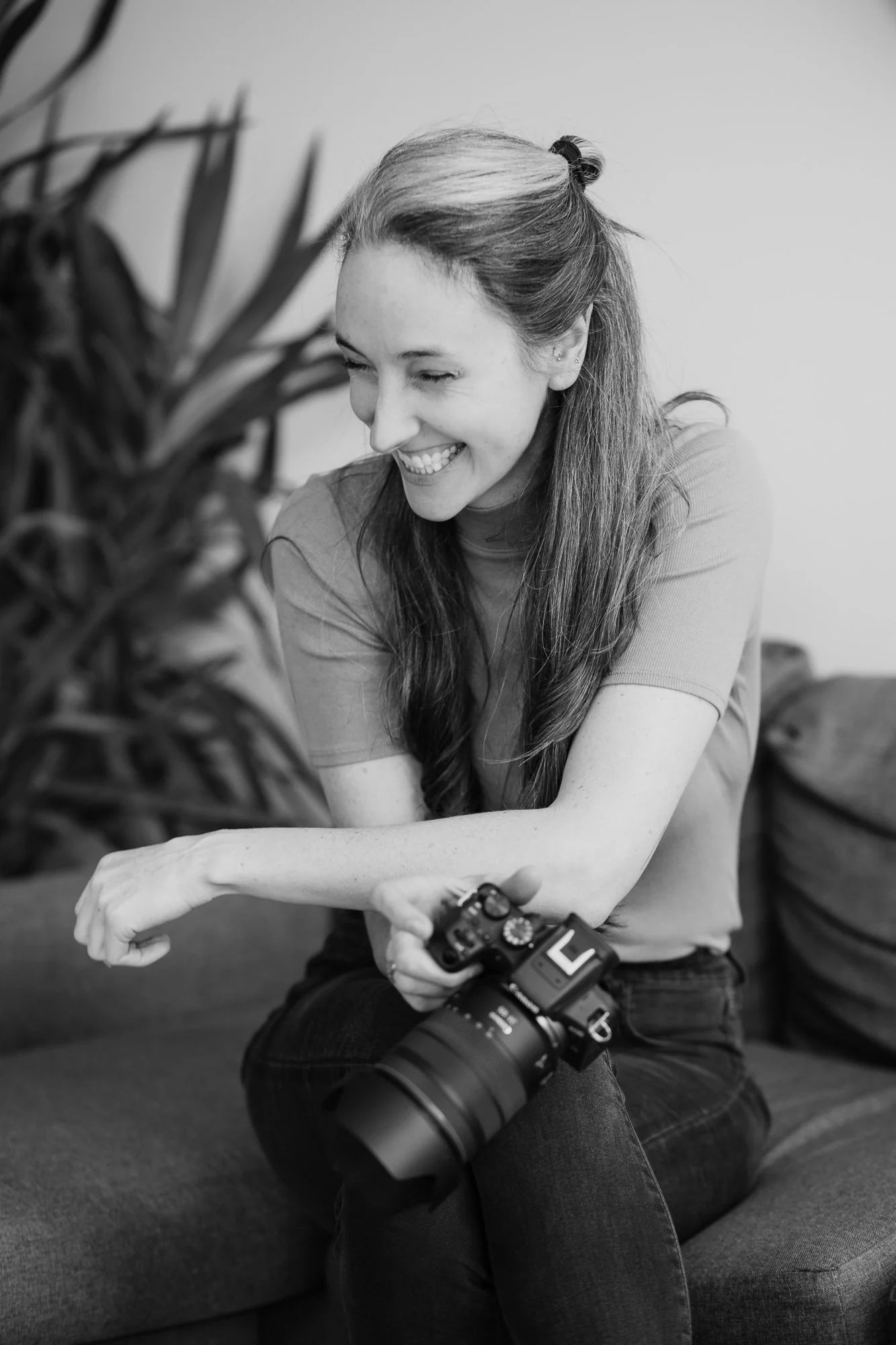
That’s me!
Keep using Your Phone
Since I literally sell brand photography services, you probably expect me to tell you that using your phone looks cheap, that brand photos are more efficient, luxurious, etc. Plot twist: I don’t think that at all. Your phone is a great camera, and for a lot of what your business needs, it's the right tool.
What I think is when you ask yourself the phone versus professional photography question, you're not really asking about cameras. You're asking whether paying someone to photograph you is worth it when you already carry a decent camera everywhere you go.
Sometimes the answer is no. Sometimes it's yes. The difference comes down to which photos we're talking about.
What your phone does really well
If we’re talking speed and accessibility, your phone wins. Let’s be honest, one of the best ways to create content is to take the path of least resistance. It’s better to post something about your business, even if “imperfect”, than to not post at all. It's there when the light hits your studio just right at 4pm, when a client agrees to take a selfie, when you're halfway through a project and the mess really speaks of your creative process. Nobody else can catch those moments, because nobody else is there.
That everyday content matters because it's what helps people connect to the actual human behind the business. It shows your business is alive and keeps you top of mind, and you can get pretty consistent with a phone too, when you get good at it.

Where a Phone Falls Short
Where directing makes or breaks your photos
You want photos of you and of your business. Maybe you have help: a colleague or employee grabs a few photos for you, or your partner does it on a Sunday. That helps, and some of those photos might be great. But holding the camera was never the hard part.
The hard part is knowing what the photos need to say. Before I pick up a camera, I'm asking who you want to reach and what they should feel when they land on your page. Then decisions are made so that every element works toward that. Without it, you get nice photos that don't add up to anything, which is often exactly why a page ends up looking off to you.
The other hard part is getting you comfortable enough to look like your best self. Most people tense up the second a lens points at them, even when the person behind it is a friend (and sometimes especially then). Your colleague might be really good at composing images, and understanding light, but more often than not isn't thinking about how to get you out of your head, or watching for the second right after you laugh. That's not a nice add-on. That is my job.
So even photos taken by someone who knows you well can fall short. Not bad, just not quite right. If being in front of a camera makes you nervous, you're far from alone. I wrote a whole piece about it: [link: I was terrified to be photographed].
Where money gets decided
Not every photo in your business does the same job. Your phone stories keep you visible, but a few images do the heavy lifting, and ground your brand vibe. Think of it as the bones of your house. You kind of want to invest in a good structure, and then decorate it with the temporary things that you can easily experiment with and replace, if need be.
Think about the moment you decide to pay someone. You've followed them for a while, and you feel ready to book the coaching package or hire them for hair & makeup. Before you reach out, you scroll back to their Instagram, or you go to their website and take a quick look at their home and about pages. You look at their face and decide, pretty quickly, whether you trust them. You decide whether you trust that your investment is worth it.
Professional brand photos are worth investing in where money gets decided. They also subconsciously set what people expect to pay you. That means profile photos, pinned posts, launches, marketing campaigns. Woven through your feed, they give your everyday phone content something solid to sit beside.

So, Phone or Photographer?
Use your phone for the everyday. Bring in a photographer for the photos of you that need to carry real weight. That's all.
If you're in Montreal and you've been feeling that gap between what you've built and how you show up online, I'd love to hear about it. Tell me a bit about your business and where you feel stuck. And if you're still figuring out who to trust with this, here's what I'd look for in anyone you hire: [link: brand photographer in Montreal, what to know before you book].
Further reading: Brand portraits vs headshots: what's the difference and which do you need [link] - How to prepare for a brand photoshoot without overthinking it [link] — Is brand photography worth it, what does it cost, and how do you know you're ready [link]
Questions people ask
Can I take my own brand photos with an phone?
You can, and for everyday content you should. Where it gets harder is the photos that carry real weight, like your profile photo, your launch posts or your about page. Those need direction: knowing what each image should say about your business, and someone who can get you comfortable enough to stop posing. That part has less to do with the camera than with who's behind it.
Is a professional photographer worth it for a small business?
If people buy from you because they trust you, usually yes. A session pays off when the images end up on your website, your social media and your sales pages, where people actually decide whether or not they trust you.
What's the difference between phone photos and professional brand photos?
The camera matters less than you'd think. The real difference is planning, and someone who can help you look like yourself instead of like someone trying to look good in a photo.
Do I still need to post my own photos after a brand shoot?
Yes. Your brand photos cover the important places and give you a library to draw from. Your phone keeps the everyday side of your business feeling real and current.
Further reading: Brand portraits vs headshots: what's the difference and which do you need [click here] - How to Prepare for Brand Portraits: A Montreal Photographer’s guide [click here] - The ROI of Brand Photography: Content that Helps You Change the World (And Make a Living) [click here]